
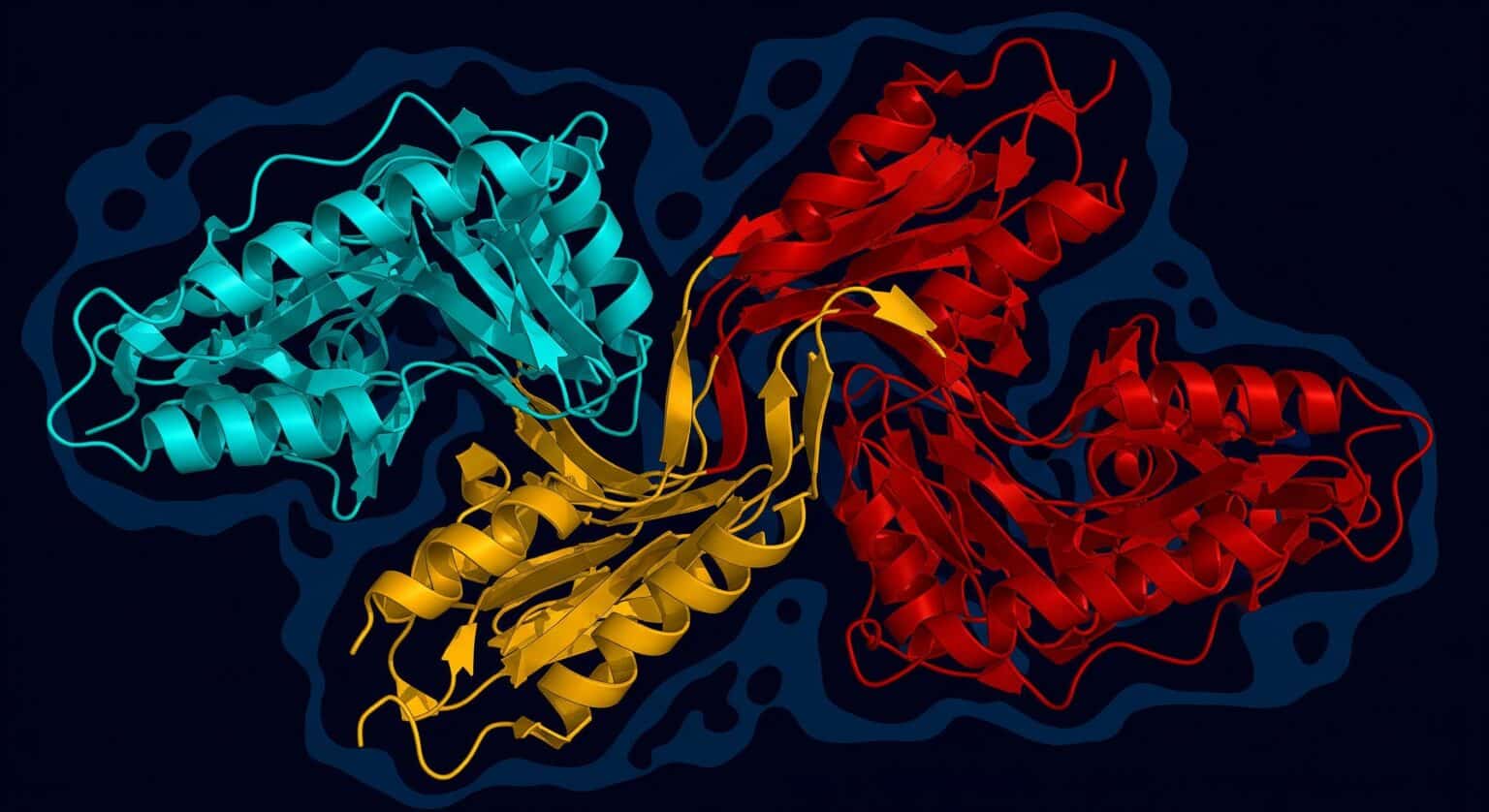
This post is based on a previous article on IPKat.
In this decision, the Board of Appeal upheld Inhibrx’s European patent EP2812443 directed to a genus of anti-CD47 antibodies defined by their epitope binding and functional characteristics, finding both sufficient disclosure and inventive step. This decision once again underlines the disparity between the US and European approaches to the patentability of antibody inventions. The decision also provides some important guidance on how to best secure the patentability of an antibody genus claim in Europe, even if achieving similar scope in the US is a long-shot at best.
Legal Background: Sufficiency of antibody inventions
Article 83 EPC requires that a European patent application disclose the invention in a manner sufficiently clear and complete for it to be carried out by a person skilled in the art. For antibody claims defined by functional features, as for any invention, this means the skilled person must be able to make substantially all antibodies falling within the claimed scope without undue burden.
According to established case law, while generating antibodies involves some degree of trial and error, this does not necessarily amount to undue burden as long as routine methods can be used (T0431/96). However, if obtaining antibodies with the claimed properties requires starting completely from scratch with no guidance, this may render the claims insufficient (T0435/20). This includes, for example, making antibodies to bind conformational (non-linear) epitopes where it may be unclear how a skilled person would go about generating new antibodies that would bind the epitope .
Case details
The patent in question related to anti-CD47 antibodies and their use in treating cancer. CD47 is a cancer antigen expressed on cell surfaces with a monomeric immunoglobulin-like structure. The claims specified an antibody defined by binding to a discontinuous epitope comprising fourteen specific amino acid residues on CD47, blocking CD47-SIRPα interaction, and not causing significant cell agglutination. Inhibrx’s has licensed its CD47 antibody technology to Celgene (BMS).
Insufficiency attack: Is X-ray crystallography an undue burden?
The Opponent (Forty Seven, Inc.) argued that the patent was invalid for insufficiency, contending that the patent only disclosed one antibody (2A1) with the claimed properties. The Opponent argued that generating other such antibodies would require undue burden through de novo immunisation.
The Opponent first argued that obtaining substantially all CD47 antibodies encompassed by claim 1 required their de novo generation by repeating the immunisation process disclosed in the patent using CD47-IgV as antigen. Since immunisation was inherently a random process that would generate many antibodies binding to various epitopes on CD47, the Opponent argued that the requirements of Article 83 EPC were not fulfilled for this reason alone (citing T 657/10).
The Opponent also argued the application as filed did not provide sufficient guidance for arriving at the claimed antibodies through de novo immunisation. In particular, no antigen was provided that reliably generated antibodies sharing their binding specificity with antibody 2A1, the screening assays disclosed would not lead necessarily and directly towards selection of the claimed antibodies. Additionally, the Opponent argued that multiple screenings would be required for a skilled person to identify antibodies suitable for CD47 binding, for SIRPα blocking, and for lack of cell agglutination. Finally, the Opponent submitted that the epitope structure recognised by candidate antibodies would need to be determined by X-ray crystallography. According to the Opponent, X-ray crystallography was an unduly burdensome technique. The Opponent finally noted that the disclosure of only a single antibody in the application as filed having the claimed properties indicated its discovery was based on chance rather than a reliable technical teaching.
Applying the case law on sufficiency and antibody inventions, the Board of Appeal rejected the Opponent’s insufficiency arguments. While acknowledging that generating antibodies through immunisation involves some unpredictability, the Board of Appeal found the patent provided adequate guidance through a complete process for generating and characterising the CD47 antibody 2A1. The patent described critical elements in the Examples, including the antigen (CD47-IgV) used for immunisation, screening assays for selecting SIRPalpha-blocking and non-cell agglutinating CD47 antibodies, structural information for exemplary antibodies, and cross-competitive binding assays for epitope mapping.
The Board of Appeal took pains to distinguish this case from T0435/20, where insufficient guidance was provided for generating antibodies to a conformational epitope . In the present case, the Board of Appeal found no evidence that the CD47 epitope or antigen were unusually difficult targets requiring special conditions.
Not just arbitrary: The technical effect of epitope selection
The Board of Appeal next went on to consider inventive step over the closest prior art documents disclosing anti-CD47 antibodies. The claimed antibodies differed to those described in the prior art by binding of the specific CD47 epitope specified in the claims. Importantly, the Board of Appeal found that the binding properties of the claimed antibodies was not arbitrary, but conferred unique properties on the antibodies. In particular, the Board of Appeal was convinced by the evidence that any antibody binding the claimed epitope would have both functional properties of SIRPα blocking and low agglutination, regardless of antibody format. In contrast, the prior art antibodies only showed low agglutination in certain formats, for example as single chain fragments (scFv) as opposed to full-length antibodies.
The Board of Appeal concluded that “[s]ince the epitope of claim 1 allows the skilled person thus a free choice as regards the CD47 antibody format for any intended application, the claimed epitope is associated with a technical effect in addition to being merely recognised by a CD47 antibody. Contrary to the appellant’s view, the selection of the claimed epitope is therefore not arbitrary” (r. 24.3). Finding no pointer to this advantageous epitope in the prior art, the Board concluded the claims involved an inventive step.
Final thoughts
The decision in T 0326/22 provides further confirmation that epitope claims and claims relying on the functional properties of antibodies are very much alive and well in Europe. The Board of Appeal confirmed that defining a genus of antibodies by epitope and function remains an acceptable patent strategy in Europe. However, it is important that adequate guidance is given in the application as filed (or is available from common general knowledge) enabling a skilled person to generate new antibodies falling under the claim without undue burden.
The decision also provides some useful guidance on establishing inventive step for epitope claims. It is important to provide a convincing inventive story that the selection of particular epitope is not arbitrary, and that the epitope confers some form of technical advantages. This aligns with the EPO’s general approach that functional features can support inventive step if they provide unexpected effects.
The decision stands in contrast to the US approach to functionally-defined antibody claims following Amgen v Sanofi, where such claims generally face significant written description and enablement hurdles . The US patents in the family at issue in T 0326/22 is limited to the CDR sequences. There is currently some excitement and debate over whether a means-plus function approach to claim drafting might bring new life into functional antibody claiming in the US.