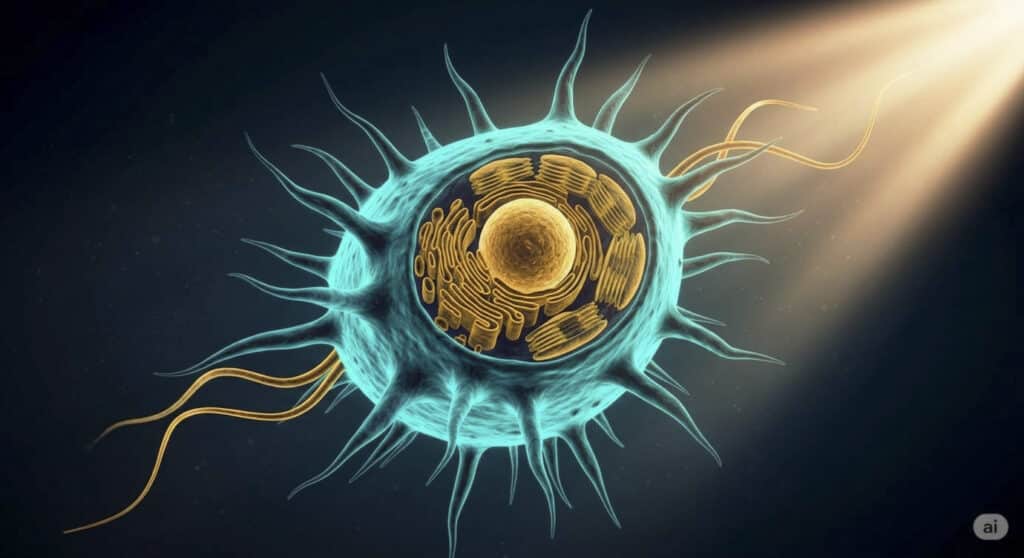
Congratulations to Professor Karl Deisseroth (The Howard Hughes Medical Institute and Stanford University), Professor Peter Hegemann (Humboldt University of Berlin) and Professor Georg Nagel (University of Würzburg), who were jointly awarded the 2026 Nobel Prize in Physiology or Medicine for their discoveries concerning light-gated ion channels and their pioneering contributions to the field of optogenetics.…
Following the release of G1/25, questions have been circling as to what the decision means for the pending referral in G 1/26 and what the consequences (good or bad) are for applicants and patentees.
The Federal Circuit’s decision in Wyeth v AstraZeneca (No. 2024-2325) applied the enablement test to a dose invention. The case is an interesting contrast to the other recent case to apply enablement to a method of treatment claim, Teva v Eli Lilly (Evolve Insights).
Albert – Construe is the latest addition to Evolve’s proprietary AI toolkit. It construes a set of claims, sets out with supporting evidence what each unclear term means, highlights any inconsistencies caused by other disclosures within an application, and flags where amendments may have changed the scope of a claim term.
G 1/24 requires that the description must always be “consulted” to interpret a claim. The question remains whether a definition in the description can override an otherwise clear meaning in the claims. In T 0715/24, Bristol-Myers Squibb (BMS) sought to persuade the Board of Appeal that a negative feature, read together with a paragraph of…
We are proud to announce that Evolve IP has been ranked in the 2026 publication of the IAM Patent 1000: United Kingdom – England and Wales. This year’s guide highlights our deep technical expertise in life sciences and our practical, strategic business focus.
Congratulations to our patent attorneys, Steven Gurney who is ranked Silver and Rose Hughes who is…
We are delighted to announce that Evolve IP has been recognised in the 2026 IP STARS rankings. This distinction reflects our team’s ongoing dedication to exceptional intellectual property support, featuring key individual accolades for our patent attorneys.
Steven Gurney has been recognised as a Patent Star. This specific ranking is awarded to senior practitioners who demonstrate proven excellence in…
Evolve Intellectual property is delighted to once again be recognised in the 2026 edition of Legal 500 for our growing specialised life science IP Practice in Cambridge, UK.
The publication highlights Steven Gurney (founder and European, UK, and Australian patent attorney) for his work protecting key biopharmaceutical assets and for his focus on complex prosecution…
Following the release of G1/25, questions have been circling as to what the decision means for the pending referral in G 1/26 and what the consequences (good or bad) are for applicants and patentees.
As patent attorneys, we should all know by now not to put client confidential information to a non-enterprise version of an LLM. However, as the capabilities of AI tools become more complex, so too does the necessity of understanding what exactly they are doing and where our data goes, beyond the simple prompt.
The loss of market share we are already seeing for on-market cell therapy products is a result of in-class competitors for the same target and indication from rival innovator companies, not copycat products with identical CAR sequences.