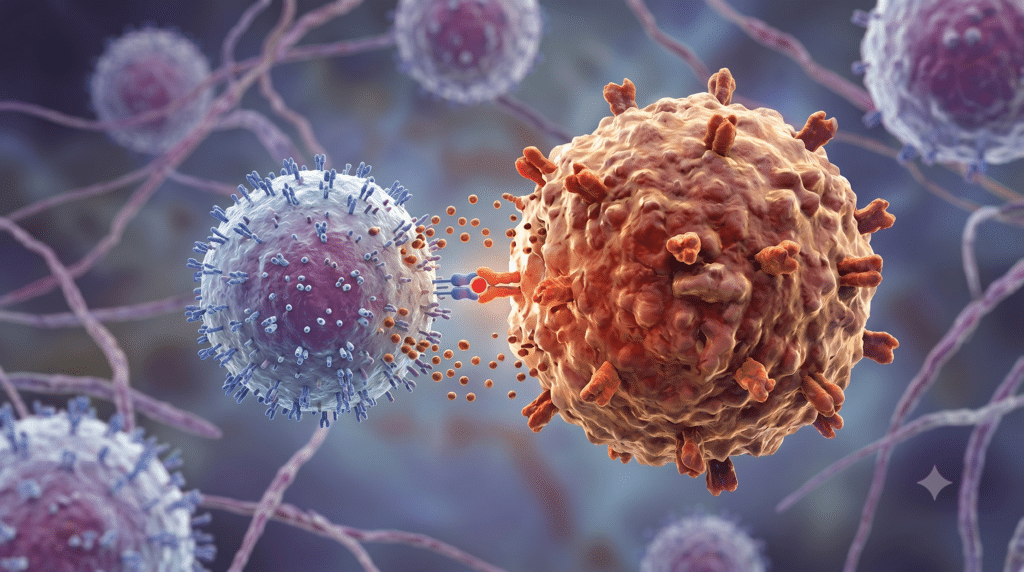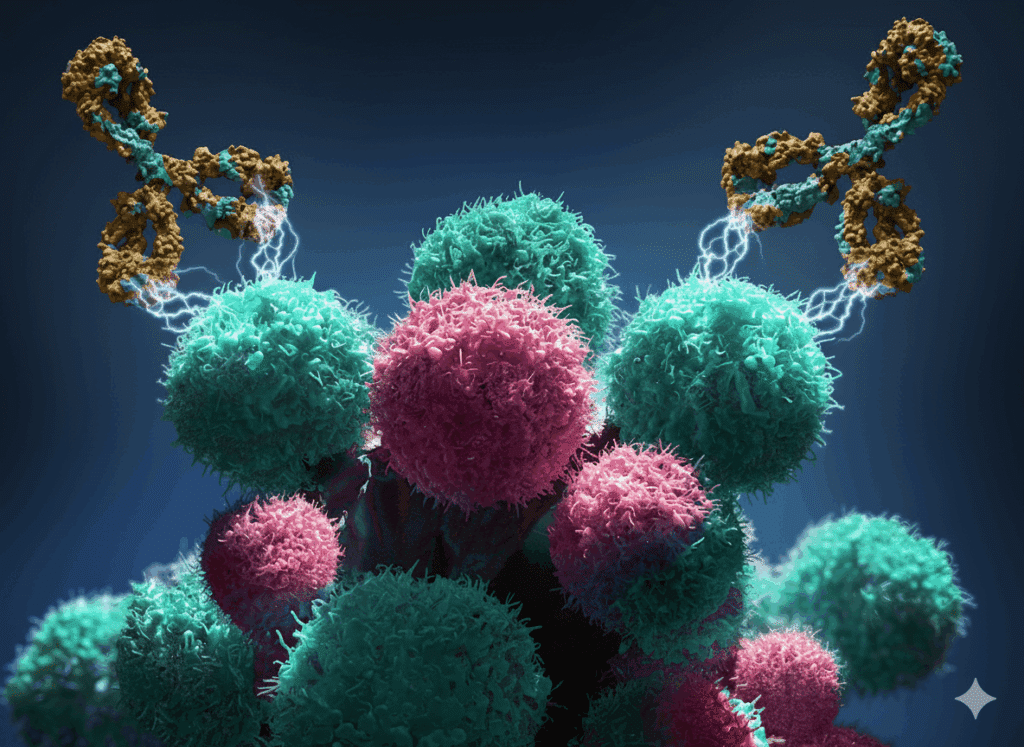
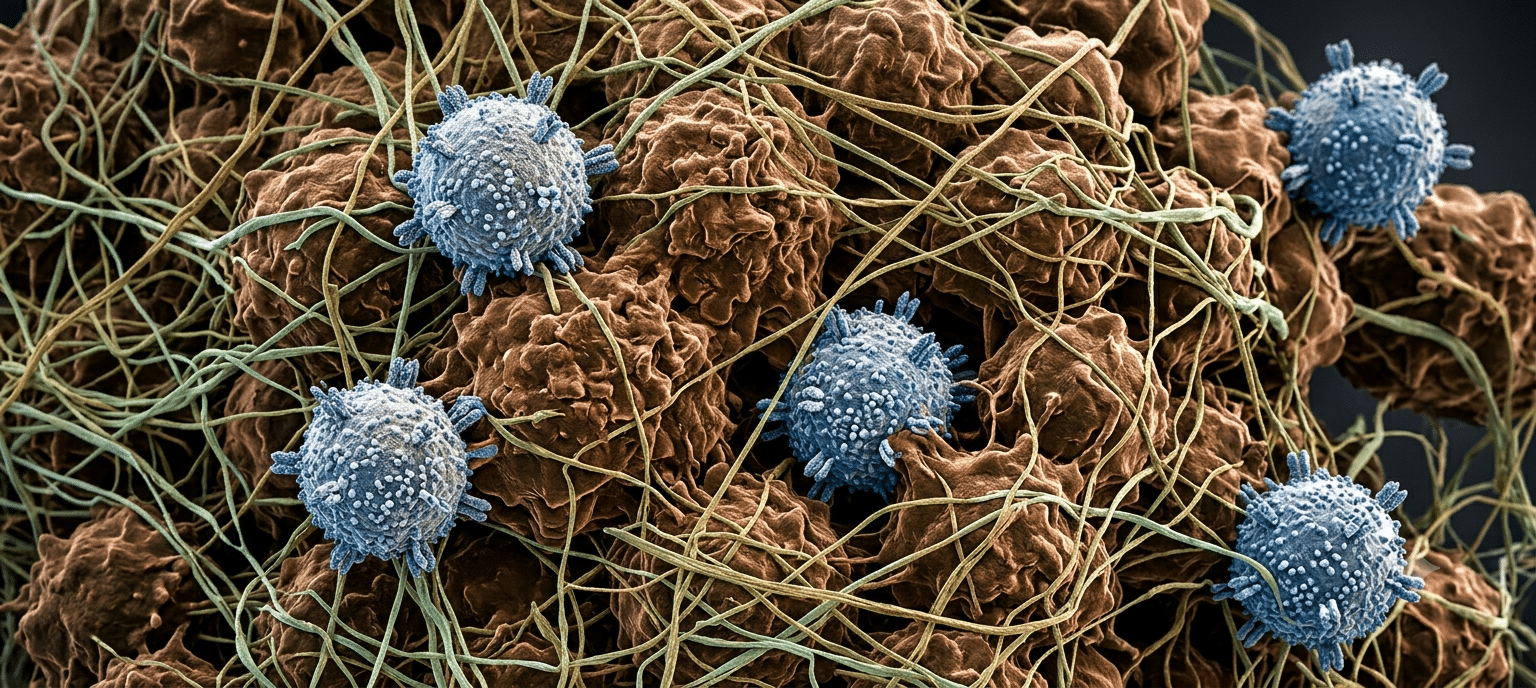
On 22 June 2026, China’s National Medical Products Administration (NMPA) approved satricabtagene autoleucel, or satri-cel, making it the world’s first CAR-T cell therapy cleared for a solid tumour. Developed by Shanghai-based CARsgen Therapeutics, the therapy is approved in China for patients with Claudin18.2-positive, HER2-negative advanced gastric and gastro-oesophageal junction (GEJ) cancer who have already failed at least two lines of treatment. For an industry that has spent years and billions trying to extend CAR-T’s blood-cancer success into solid tumours, it is a genuine first, and a commercial inflection point.
Beyond the incredible hope this brings to patients, there are a few things that spring out from this viewed from an IP and commercial perspective. First is the clear impact and importance of China in CAR-T cell development. This has been the story in next-generation in vivo CAR-T development, but this approval shows the relevance of this to autologous therapeutics as well. No IP landscaping can fail to take account of China. Second, the primary competition for satri-cel is not other CAR-T cell therapies, but instead is the host of other modalities pursuing the same target and indication. This competition creates complexity for both FTO and patentability analysis. scFv binders may be repeatedly repurposed, IP may cover multiple configurations, and demonstrating that your proprietary binder does something inventive becomes increasingly challenging, both from the IP and commercial perspective.
A scientific and commercial breakthrough
CAR-T has been a blockbuster franchise since 2017, but exclusively in haematological cancers: leukaemias, lymphomas and myeloma. Those indications are valuable but comparatively small. Solid tumours represent roughly 90% of human cancers, and gastric cancer alone is one of the leading causes of cancer death worldwide. Until now, none of that market was addressable by CAR-T. Satri-cel is the proof of concept that the modality can work commercially in solid disease, and that repositions the entire competitive landscape.
The pivotal evidence (published in The Lancet) came from CT041-ST-01, the first randomised controlled trial of a CAR-T in any solid tumour. According to the company data, across 156 heavily pre-treated patients, satri-cel roughly doubled median progression-free survival versus physician’s choice (3.25 vs 1.77 months) and improved overall survival (7.92 vs 5.49 months).
CARsgen Therapeutics is the developer and now the first-mover in the space. The company was founded in 2014 by Dr. Zonghai Li, who remains its Chairman, CEO and Chief Scientific Officer, to commercialise work from his academic lab at the Shanghai Cancer Institute and Renji Hospital, Shanghai Jiao Tong University. However, despite the company’s success in China, it may be some time before we see an equivalent US approval. In December 2023 the FDA placed satri-cel and two sister programmes on clinical hold following an inspection of CARsgen’s manufacturing facility in Durham, North Carolina, over chemistry, manufacturing and controls (CMC) concerns. The hold was lifted in November 2024.
Why solid tumours were so hard, and why that matters commercially
CAR-T thrived in blood cancers partly because targets like CD19 are clean and uniformly expressed. Solid tumours threw up problems that translate directly into commercial risk. Most solid-tumour antigens also appear on healthy tissue, so a therapy potent enough to kill the tumour can damage vital organs. Engineered cells struggle to penetrate dense tumours and survive an immunosuppressive microenvironment, and uneven target expression lets cells escape and relapse.
Satri-cel’s answer was target selection. Claudin18.2 is a tight-junction protein that is normally locked away and restricted to gastric mucosa, but becomes exposed on the surface of cancer cells, and is present in around 80% of gastric adenocarcinomas. That combination of tumour prevalence and limited normal-tissue access is what made the safety equation work where others failed. The target is already validated by the antibody zolbetuximab (Vyloy), but satri-cel is the first CAR-T to reach it.
Where the IP value sits
From an IP standpoint, autologous CAR-T can now be considered a relatively mature field. As with the majority of new autologous CAR-T products, the IP protecting the asset resides first and foremost in the CAR binder. A composition of matter patent equivalent to that which would protect a therapeutic monoclonal antibody is usually filed to protect the CAR of a CAR-T cell therapy.
Whilst CARsgen Therapeutics has not explicitly provided the sequence of the CAR in satri-cel, we know that it possesses a conventional second-generation CAR design comprising a CD8α hinge / CD28 / CD3ζ architecture used widely across the field. CARsgen Therapeutics owns multiple patents directed to CARs and protein binders for Claudin 18.A2, including US10377822 B2 and US11111295 B2, from which the lead CAR and scFv sequences can be extracted. As a perusal of the CARsgen portfolio reveals, when it comes to binder IP, patentability can be a challenge. One of their European patents in the same family (EP3170842 B1) was opposed and revoked by the EPO for lack of inventive step, on the grounds that the scFv region of the CAR was already known and the CAR was not shown to have any surprising properties. It is likely that CARsgen Therapeutics will now be seeking to protect other aspects of their product derived from its specific use in solid tumours versus haematological cancers, such as dosing, administration methods, and patient selection.
The competitive field
Satri-cel is first-in-class as a CAR-T, but it is not first to the target. On the contrary, the Claudin18.2 field is already busy. Astellas’s zolbetuximab (Vyloy), a Claudin18.2 monoclonal antibody, is already on the market, approved in the first-line setting in combination with chemotherapy, validating the target commercially. In fact the most advanced challengers to satri-cel are not rival CAR-Ts but other modalities. AstraZeneca’s AZD0901 (formerly CMG901), a monomethyl auristatin E antibody-drug conjugate licensed from KYM Biosciences (a Keymed and Lepu joint venture), has moved into phase 3 first-line testing, and Innovent’s IBI389 is a Claudin18.2 x CD3 bispecific in early trials. Across the Claudin18.2 pipeline, monoclonal antibodies, ADCs and CAR-T account for the bulk of activity, with CAR-NK and T-cell engagers behind them.
Within CAR-T specifically, satri-cel’s lead is real but narrow. Legend Biotech’s LB1908, an autologous Claudin18.2 CAR-T, has reported early-phase activity in gastric, gastroesophageal and esophageal adenocarcinoma, and several other China-based Claudin18.2 cell therapies are in development. The practical question for each is the one CARsgen had to answer first: manufacturing, persistence and a clean enough safety margin to justify a bespoke cell therapy over an off-the-shelf antibody or ADC.
Stepping back to look at the whole solid-tumour cell-therapy market and satri-cel is the first CAR-T but not the first cell therapy to arrive. Iovance’s lifileucel (Amtagvi), a tumour-infiltrating lymphocyte product, was approved for melanoma in early 2024, and Adaptimmune’s afami-cel (Tecelra), an engineered TCR-T against MAGE-A4, followed for synovial sarcoma later that year. Other CAR-T programmes are pushing at different solid-tumour antigens, including GD2 in neuroblastoma, GPC3 in liver cancer, mesothelin across several tumours, EGFR and IL-13Rα2 in glioblastoma, and DLL3 in small-cell lung cancer, many of them using armoured designs that secrete cytokines such as IL-15 to improve persistence inside the tumour.
The competitive landscape for CAR-T therapies hoping to follow in the footsteps of satri-cel is therefore complex. FTO analysis must take into account not only Satri-cel’s IP, but also potentially blocking IP protecting binding regions of other modalities targeting Claudin18.2. On top of this, any new innovators in the field wishing to follow CARsgen’s success will also face a relatively high patentability hurdle, given the current popularity of the Claudin18.2 target in CAR-T and beyond. Any new products will need to show that they solve a technical problem and/or provide some improvement over the existing binders, and are not just an obvious alternative seeking to avoid the existing IP. As with most things, the IP strategy therefore also aligns with the commercial and clinical realities.
Author: Rose Hughes

Rose is a biotech and pharmaceutical patent specialist with over a decade of experience in intellectual property. Rose is a patent attorney at Evolve, where she leverages our unique fractional in-house model to provide clients with deep patent law expertise combined with the strategic commercial oversight typically associated with senior in-house counsel. Rose acts Fractional IP counsel for a number of clinical-stage cell therapy companies.
With a PhD in Immunology from UCL, Rose applies her technical background to complex innovations in biologics, cell and gene therapies, and the rapidly emerging field of AI-assisted drug development. Previously, Rose held the role of Director, Patents at AstraZeneca, where she was responsible for global IP portfolios and IP strategy and IP lead for the biopharma cell therapy department.