
Originally posted on IPKat.
In such a market, sequence-limited composition-of-matter protection of the CAR sequence may have limited value. We are now seeing this play out at the UPC, with the company behind the first-to-market anti-BCMA CAR-T, Abecma, asserting a broad, non-sequence-limited patent against its in-class competitor product, Carvykti. The commercial stakes are high, given that the allegedly infringing product generated global revenue of nearly $2 billion last year. With a patent claim of this breadth asserted, the impact on patent strategy in this space may also be significant. Add to this the complex interplay between a UPC infringement and revocation case happening contemporaneously with an EPO opposition, this will be a closely watched case.
CAR-T cell therapy
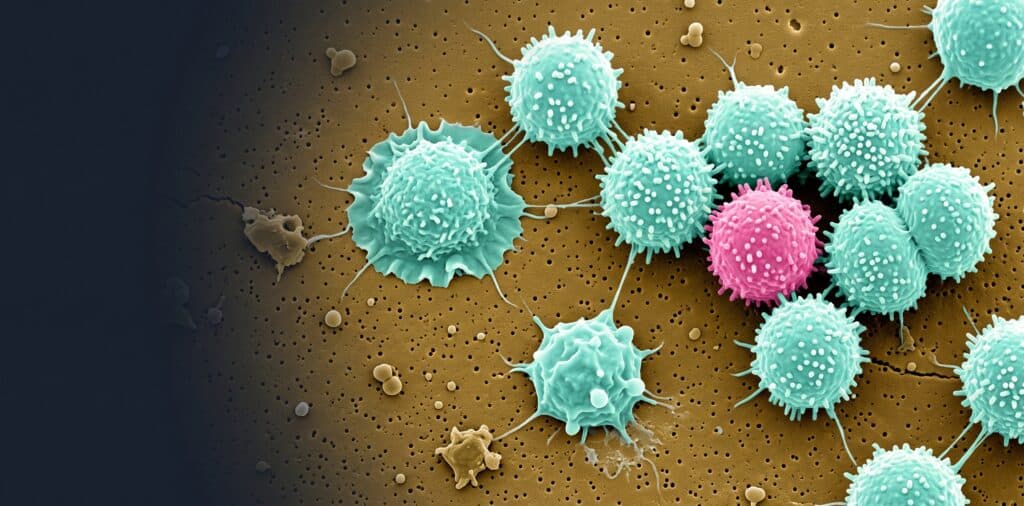
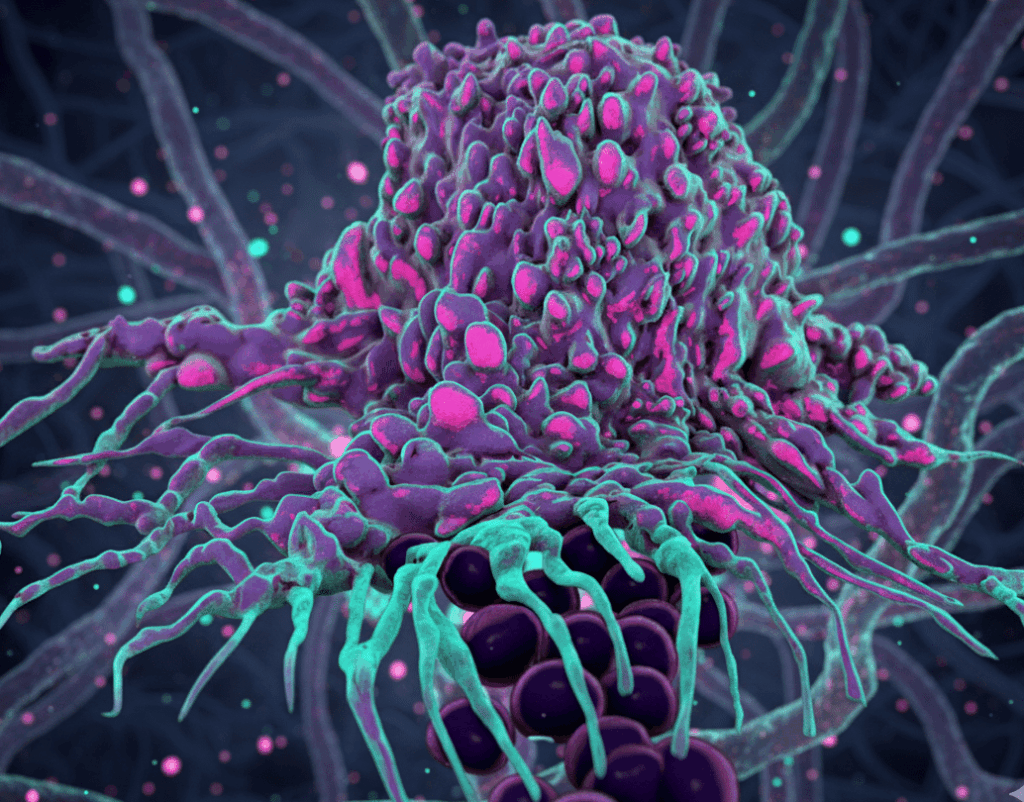
In autologous CAR-T therapy, T-cells are taken from the patient and then engineered to express an antigen-targeting molecule in the form of a chimeric antigen receptor (CAR). The engineered cells are then expanded and infused back into the patient, where they circulate, find whatever carries the target antigen (e.g. cancer cells, autoreactive B cells), and kill it. A single infusion has been shown to produce durable remission in patients who have exhausted every conventional option. Unlike conventional drugs, the cells themselves divide and persist within the patient. A recent paper found CD19 CAR-T cells in patients with non-Hodgkin lymphoma who remained progression-free 10 years after initial treatment (Paruzzo et al.).
Rethinking IP strategy for CAR-T cell therapies
A radically different modality sometimes needs a different IP strategy that fits the commercial realities (Evolve Insights). In the world of CAR-T cell therapies, there are currently no biosimilars, and no agreed biosimilar pathway provided by the regulators (Evolve Insights). The essential problem is that cell therapy products are so complex and heterogeneous that it is unclear how “biosimilarity” could ever be demonstrated, particularly for an autologous cell therapy product. The characteristics of a cell therapy product are also heavily dependent on the manufacturing process, which is difficult for other companies to reproduce (Evolve Insights).
The conventional IP strategy of defining loss of exclusivity based on regulatory exclusivity or sequence-specific product protection therefore does not make sense for CAR-T cell therapies (Evolve insights). Market erosion for cell therapies will likely not come from biosimilars with identical CAR sequences but is far more likely to come from fast-follower, in-class competitors, i.e. CAR-T cell therapy products directed at the same target for the same indication, but with different targeting molecules with different sequences.
These principles are already observable in the market performance of approved CAR-T cell therapies. Gilead’s CD19 CAR-T cell therapy Yescarta was approved by the FDA in 2017. As Yescarta is a biological product, US regulatory exclusivity runs to 2029. Does that mean LoE for Yescarta is 2029? It seems not. After a steady growth trajectory to 2024, Yescarta global revenue is already beginning to fall, dropping 5% from 2024 to 2025. Part of the reason for this is probably competition from Yescarta’s in-class competitor, Breyanzi. Breyanzi has an entirely different CAR sequence from that of Yescarta. Yescarta is also facing out-of-class competition for the same indication from T-cell engagers.
An IP strategy that comfortably assumes a loss of exclusivity based on expiry of regulatory exclusivity or a composition-of-matter case covering the CDRs of the CAR is therefore outdated. The nature of the products means that this strategy just does not make sense. Instead, the focus of IP strategy for CAR-T cell therapies needs to be on how the market may be protected from in-class and out-of-class competitors. This means broader patents that capture more than just the specific binding sequence of the CAR. Patents that focus on method of treatment, dose, patient subpopulation and treatment protocols are likely to provide far more value in terms of market protection for the product.
The cell therapy fast-follower
Turning to the patent at issue in the present case. In multiple myeloma, the favoured CAR target is B-cell maturation antigen (BCMA). There are currently two approved anti-BCMA CAR-T cell therapies marketed in Europe for multiple myeloma: Abecma and Carvykti. Abecma (idecabtagene vicleucel) was first, approved in 2021, developed by bluebird bio and latterly the sole asset of the bluebird spin-out 2seventy bio, now acquired by Bristol Myers Squibb (BMS). Carvykti (ciltacabtagene autoleucel) followed Abecma with an approval in 2022 and is marketed by the Janssen companies within Johnson & Johnson (J&J), together with Legend Biotech.
Despite being second to market, Carvykti is proving to be a far greater commercial success than Abecma. Carvykti recorded approximately $1.9 billion in net trade sales for 2025, with more than 10,000 patients treated and availability across 294 sites. Abecma, by contrast, recorded $427 million worldwide over the same period. In March 2025 BMS bought the whole of 2seventy bio for around $286 million, which is roughly what Carvykti now sells in a couple of months.
Part of the reason for the divergence in commercial success between Abecma and Carvykti may be regulatory. Carvykti is approved for use after a single prior line of therapy in lenalidomide-refractory patients, whilst Abecma sits further back in the treatment pathway. Carvykti’s label has also since been updated to carry an overall survival benefit from the CARTITUDE-4 study. Part of the difference may also be manufacturing capacity, which for an autologous cell therapy is fundamental to cost and patient access.
Importantly for the present case, there are also differences in both the sequence and the structure of the CAR. Abecma’s CAR uses a conventional murine single-chain variable fragment (scFv) as its binder. Carvykti’s CAR uses two llama-derived heavy-chain-only VHH domains directed at two distinct BCMA epitopes, giving bivalent engagement of the target.
CAR-T litigation at the UPC
Seeing an opportunity, 2seventy bio, now a BMS company, has brought infringement proceedings before the Brussels Local Division of the UPC against the companies behind Carvykti (eighteen defendants, being J&J itself, thirteen Janssen companies and four Legend Biotech companies) (UPC_CFI_029/2026). The patent in question, EP 3689383, is licensed to 2seventy bio by the United States Government (NIH) and is one case in a large global patent family. EP 3689383 is a recently granted divisional. The patent was granted on 31 December 2025, notably almost fourteen years after the priority date. The patent family is directed to anti-BCMA CARs for multiple myeloma and discloses the sequence and structure of the CAR used in Abecma.
Claim 1 of the granted divisional is as follows:
A pharmaceutical composition comprising a population of T-cells that express a chimeric antigen receptor (CAR) for use in a method of treating multiple myeloma, wherein the CAR comprises an antigen recognition moiety and a T-cell activation moiety, and wherein the antigen recognition moiety is directed against B-cell Maturation Antigen (BCMA).
The granted claim is therefore not limited by sequence. There is no CDR, no scFv, and no specified costimulatory domain. Every anti-BCMA CAR-T cell therapy for use in the treatment of multiple myeloma therefore falls within the scope of claim 1, whether its binder is a murine scFv, a humanised scFv or a pair of camelid VHH domains.
Other granted patents in the family are limited, for example, to the CDR sequences for Abecma. These patents therefore cover Abecma, but not Carvykti. The recently granted EP 3689383, by contrast, covers both Abecma and Carvykti. 2seventy bio, as licensee, has now sued J&J and Legend Biotech on this basis.
An EPO opposition, filed by a straw man, arrived on the very day the patent was granted. Revocation counterclaims have also since been filed at the UPC (UPC_CFI_1940/2026, UPC_CFI_1934/2026), where the oral hearing is listed for 23 March 2027.
UK action: An address for service is enough to sue a state
The dispute is also not limited to the UPC and EPO. Janssen-Cilag Limited, J&J’s UK company and not one of the UPC defendants, has also brought a revocation action against the UK designation before the English High Court in February 2026 (HP-2026-000007). This action has already produced a judgment of its own, because the patentee is a sovereign state. The United States objected that the claim papers should have been delivered to it through diplomatic channels, and not simply sent to the UK address it had recorded against the patent at the UKIPO. Mr Justice Mellor disagreed. He held that a foreign state which registers a UK address for service at the UKIPO thereby agrees to be sued here, notwithstanding the ordinary requirement under section 12(1) of the State Immunity Act 1978 for service through diplomatic channels (Janssen-Cilag Limited v The United States of America [2026] EWHC 1532 (Pat)).
Once service was resolved, the United States and 2seventy bio filed a counterclaim for infringement and elected financial relief in lieu of an injunction. Janssen-Cilag then sought expedition of the trial to the autumn of 2026, arguing that it needed commercial certainty ahead of NICE’s assessment of Carvykti. Mellor J accepted that there was good reason for expedition but declined to go that far, and the trial is now listed for March 2027. The case is therefore in play in three forums, all of which will now be asked to consider the validity of the broad claim
Analysis
This case is interesting not only from the commercial standpoint of the European CAR-T cell market, but also for the potential precedent it may set with regard to functionally limited claims for biologics. The established case law of the EPO is that claims relating to biologics such as monoclonal antibodies do not necessarily have to be limited by sequence in order to satisfy the sufficiency requirements and enablement over the whole scope of the claim. This contrasts with the US approach established by the Supreme Court in Amgen v Sanofi, in which broad functional antibody claims face exceptionally high written description and enablement hurdles (Evolve Insights) (although the recent Federal Circuit decision in Teva v Eli Lilly suggests that method of treatment claims for a biologic genus may be treated more leniently (Evolve Insights). In Europe and the UPC the challenge for such broad claims is not generally sufficiency, but inventive step (Evolve insights). This is likely to be the main battleground for the present case (Evolve Insights).
The composition-of-matter patent family relating to Abecma contains patents with the types of granted claims that conventional pharma IP strategy for biologics calls for, namely sequence-limited claims directed to the CAR antigen binding region. These claims cover Abecma. They do not cover Carvykti. Notably however, the family also contains very broad US patents not limited by sequence. Abecma is many years away from what might be considered the traditional LoE date. Expiry of regulatory exclusivity in Europe is 2031, and the patent expires in 2033. However, Abecma’s market share is already suffering from in-class competition in the form of Carvykti. BMS has therefore brought infringement proceedings using the broader patent, not limited by sequence. Regardless of the validity questions, this case seems to be the only European case in the family of value to BMS, as it is the only one that can be asserted against market competitors. Broad claims for biologics are difficult to obtain and even more difficult to defend (Evolve Insights). Regardless of the outcome of this case, the lesson is unlikely to be that such patents are your best hope of market protection in the CAR-T field. Instead, if a cell therapy company is going to protect its market, it must look for other forms of IP that are rooted in clinical innovation (Evolve Insights).
Author: Rose Hughes

Rose is a biotech and pharmaceutical patent specialist with over a decade of experience in intellectual property. Rose is a patent attorney at Evolve, where she leverages our unique fractional in-house model to provide clients with deep patent law expertise combined with the strategic commercial oversight typically associated with senior in-house counsel.
With a PhD in Immunology from UCL, Rose applies her technical background to complex innovations in biologics, cell and gene therapies, and the rapidly emerging field of AI-assisted drug development. Previously, Rose held the role of Director, Patents at AstraZeneca, where she was responsible for global IP portfolios and IP strategy at every stage of the pharmaceutical pipeline, from platform development and on-market commercialization to SPCs and patent term extensions.
A recognized thought leader in the field, Rose has been a regular contributor to IPKat since 2018, offering practical insights into European patent law developments. She is also a frequent speaker on the epi podcast, a guest lecturer for the Brunel University IP law Postgrad Certificate, and a contributing author to published books A User’s Guide to Intellectual Property in Life Sciences (2021) and Developments and Directions in Intellectual Property Law (2023).